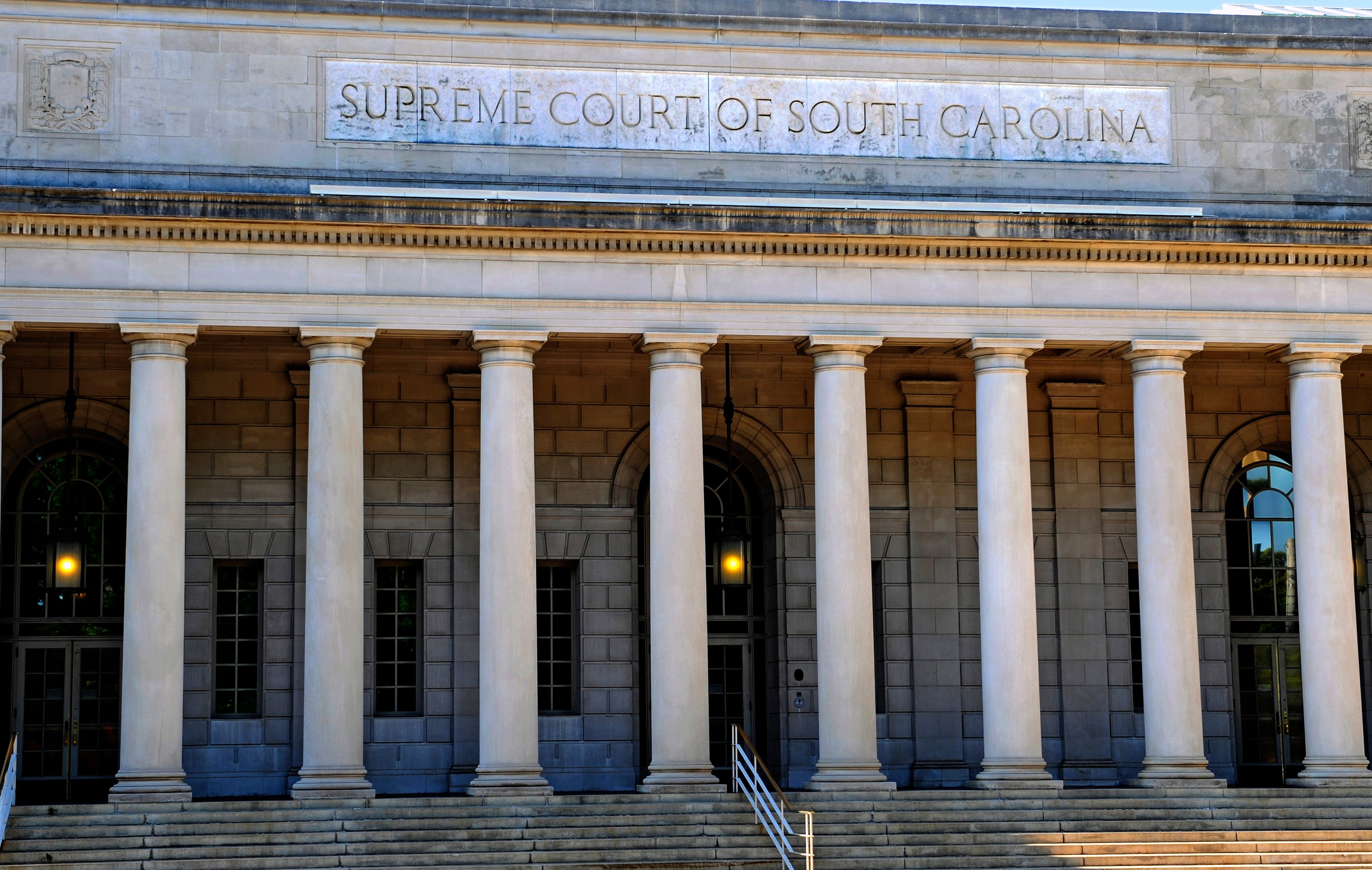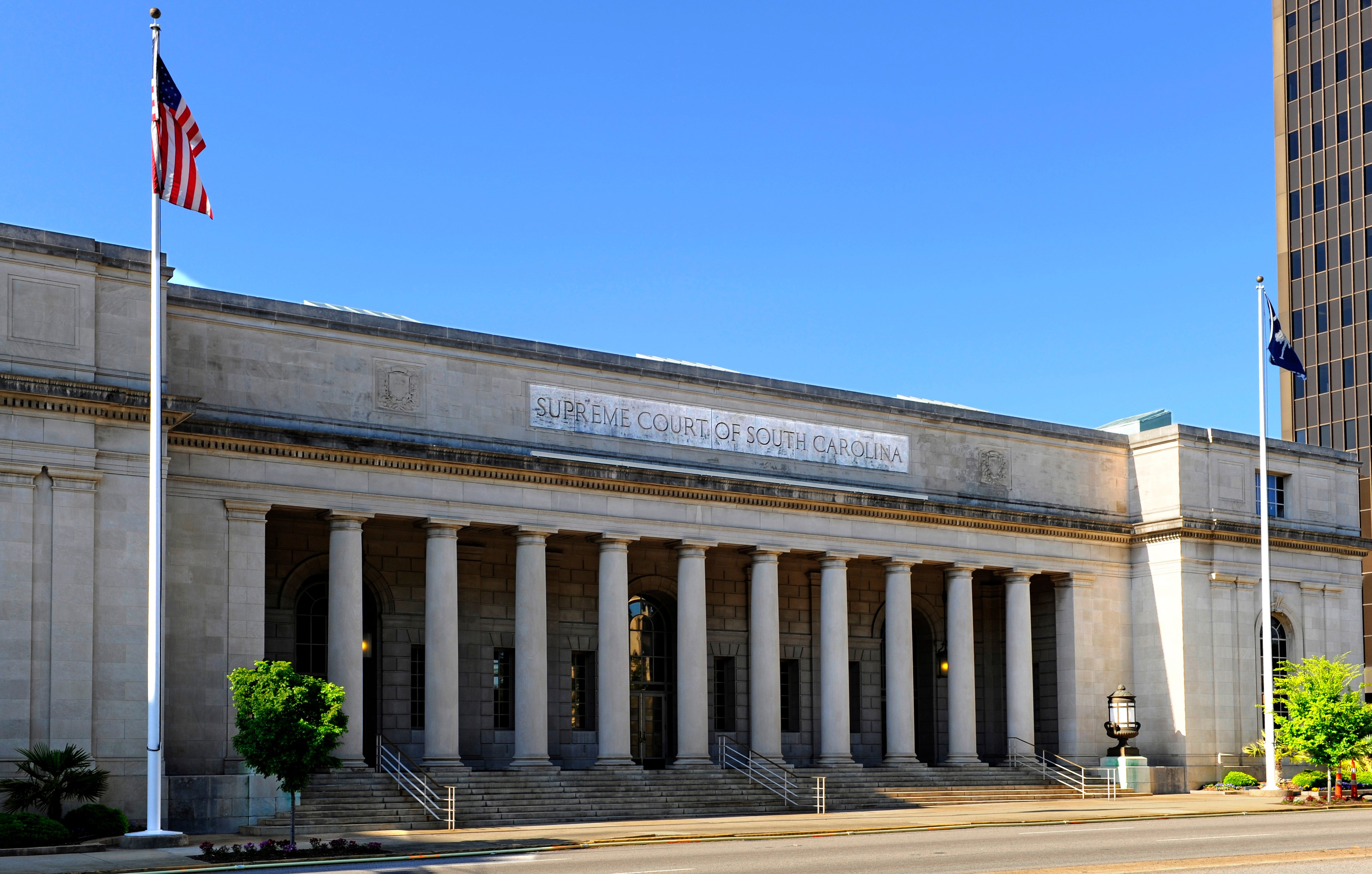
South Carolina
would have the longest ban in the nation on former state lawmakers
lobbying their legislature under a proposal by S.C. Sen. Mick Mulvaney,
R-Lancaster.
The proposed ban, five years, would not lock a revolving door of lawmakers turned lobbyists, but would go a long way toward closing it and would be three years longer than anything similar nationally.
State
law currently imposes a one-year ban. Mulvaney wants to extend that to
five years. “This is part and parcel of an approach that recognizes that
citizens must have confidence in the system,” he says.
The Nerve
has identified nine former state lawmakers who are registered
lobbyists, all but one of whom served in the House. Their stints in the
General Assembly date as far back as the early 1980s to as recently as
2008.
S.C. law requires lobbyists to register with the State Ethics Commission.
Mulvaney
sponsored a bill in last year’s legislative session to lengthen the ban
to five years. The bill, S. 660, was introduced in April 2009 and sent
to the Senate Judiciary Committee.
It received no action after that.
The
bill also would apply to constitutional officers as well as directors
and deputy directors of state agencies. And, through grandfathering, it
would change the applicable dates of their time in office such that it
would pertain only to recently elected and appointed officials, as
follows:
- Lawmakers elected after Dec. 31, 2007, instead of the current date under state law – Dec. 31, 1991.
- Constitutional officers elected after Dec. 31, 2005, rather than Dec. 31, 1993.
- Department directors and deputy directors appointed after June 30, 2005, versus June 30, 1993.
Seven
senators co-sponsored the legislation: Republicans Kevin Bryant of
Anderson, Paul Campbell of Berkeley, Tom Davis of Beaufort, Shane Massey
of Edgefield, Mike Rose of Dorchester and Phillip Shoopman of
Greenville; and Democrat Vincent Sheheen of Kershaw.
Mulvaney
says he would like to reintroduce the proposal, either as its own bill
or as part of a broader reform measure that also would ban publicly
funded lobbying and prohibit legislators who are dual state employees
from voting on budgetary or other matters that could pose a conflict of
interest to them.
“I think it’d be nice to have a comprehensive transparency bill,” Mulvaney says.
Known
as a “cooling-off” period, some form of a revolving-door lobbying
restriction on former legislators is on the books in 31 states,
according to research as of January 2009 by the National Conference of
State Legislatures, a bipartisan legislative service organization with
offices in Denver and Washington, D.C.
“At least 16 states
restrict former legislators from lobbying for one year after leaving
office and six states have two-year restrictions,” Peggy Kerns, director
of the National Conference’s Center for Ethics in Government, writes in
a briefing paper on revolving-door laws.
Georgia has a one-year ban; North Carolina, six months.
So, is a one-year ban an appropriate amount of time?
“I
think that’s a call the General Assembly has to make for its members,”
says Cathy Hazelwood, attorney for the State Ethics Commission. “We
don’t weigh in on that.”
However, Hazelwood says, “If it’s going to be a full year, then make it a complete year.”
What does she mean by that?
“That you don’t monitor legislation; that you don’t do PR (public relations) work,” Hazelwood says.
No state has a five-year prohibition on former lawmakers becoming lobbyists, the National Conference research shows.
Thus, were South Carolina to extend its ban to five years, it would be the longest in the country.
Mulvaney
says he has been surveying his constituents about the Palmetto State’s
revolving-door law and other issues. Most responses on the
revolving-door ban have favored a lifetime restriction, the senator
says.
But because of constitutional questions, he says, “I don’t think you can do that.”
Agreed,
says John Crangle, an attorney and a respected good-government watchdog
who has policed the State House since the Wild West days of a bribery
scandal 20 years ago dubbed “Lost Trust.”
“It’s probably a
violation of the First Amendment,” Crangle, director of the nonprofit
group Common Cause of South Carolina, says of a lifetime ban.
In fact, he contends that even a five-year revolving-door law would be unlikely to stand up to constitutional muster.
Thomas
Crocker teaches constitutional law at the School of Law on the
University of South Carolina’s Columbia campus. Crocker says he is not
well versed in the legal ramifications of cooling-off periods. But he
concurs that a lifetime ban would be a problem constitutionally because
it would “essentially muzzle free speech.”
Limited restrictions
offer an alternative way to avoid the appearance of impropriety, Crocker
says. “Someone who’s been out of the Legislature for a number of years
is presumed to have less influence than someone who was just there three
months ago,” the professor says.
Crangle goes yet a step
farther, arguing that lengthening the state’s ban is unnecessary.
“There’s no need for it because you really don’t have a problem now,” he
says. “I don’t think it even threatens to be a serious problem, to be
honest with you.”
Crangle lobbied for South Carolina’s one-year
ban in the aftermath of Lost Trust, which ensnared several state
lawmakers in an FBI-led bribery sting.
The ban was included in a
sweeping drain-the-swamp law passed as result of the scandal, the
Ethics, Government Accountability, and Campaign Reform Act of 1991, or
the Ethics Act for short.
Restrictions at the federal level
notwithstanding, the revolving door is much more problematic in
Congress, Crangle says. “I think about 170 former U.S. House members are
lobbyists.”
The federal cooling-off period is two years for
U.S. senators and one year for U.S. House members, according to a May 12
report by Congressional Research Service legislative attorney Jack
Maskell.
Adam Taylor is one of at least nine former members of
the S.C. Legislature who are registered lobbyists. Taylor, a Republican
from Laurens, served five two-year terms in the House, from 1998 to
2008.
Upon leaving the General Assembly, Taylor went to work for
his and his wife’s alma mater, Lander University, a small, publicly
funded school in the Upstate, as its vice president for university
advancement.
Then after two years, Taylor recently became
Lander’s vice president for governmental affairs. And, in July, he
registered as a lobbyist for the university.
Taylor speaks well
of Mulvaney, saying he considers his former colleague a friend. “But I
think the current one-year plan is OK,” Taylor says. “I think it’s
worked well in the past.”
He points out that in most cases the
state’s one-year revolving-door restriction also applies to judgeships
in South Carolina, many of which lawmakers fill by majority vote.
“There’s a lot of attorneys in the General Assembly that want to be
judges,” Taylor says, “and they also have that one-year cooling-off
period.”
Until he signed up to advocate for Lander in the
General Assembly, it was the only publicly funded higher education
institution in the state without a lobbyist, he says. “We need to have
our voice at the table, just like everyone else.”
The other eight former lawmakers who are registered lobbyists are:
- Billy
Boan, who served in the House for 16 years in the 1980s and ‘90s
and is a senior vice president of state government relations in the
South Carolina office of McGuireWoods Consulting. The firm also
employs former Gov. Jim Hodges, for whom Boan served as chief of
staff.
- Mike Daniel, who presided over the Senate as lieutenant governor from 1983 to 1987 and is now an attorney in Columbia.
- John G. Felder Sr., a former House member who also now practices law in the Midlands.
- Ronald
C. Fulmer Sr., a House member from 1990 to 1996 and co-founder of
State Capitol Group, a lobbying and government relations company in
Columbia.
- Shirley Hinson, who held a House seat
from 1996 to 2007 and is now a lobbyist for the publicly funded
College of Charleston as its government relations director.
- Mark
Kelley, who served for 10 years in the House and is now a
registered lobbyist for another state-supported university, Coastal
Carolina, on behalf of Kelley, McCain & Smith Owens, a
communications and consulting firm in the Capital City.
- Steve
Lanford, a former state representative who is a registered
lobbyist for, and executive director of, the South Carolina
Emergency Medical Services Association. In widespread media reports
last legislative session, Lanford came under fire for opposing
efforts to make the names of emergency medical responders public.
- Will McCain, previously a House member who now works with Kelley at their Kelley, McCain & Smith Owens firm.
Reach Ward at (803) 254-4411 or eric@thenerve.org.